Liquidity Mediation: Brokers Reshaping How Trades Execute in Exchange Settings
Written by Olivia Hoffmann · May 24, 2026
Liquidity Mediation: Brokers Reshaping How Trades Execute in Exchange Settings
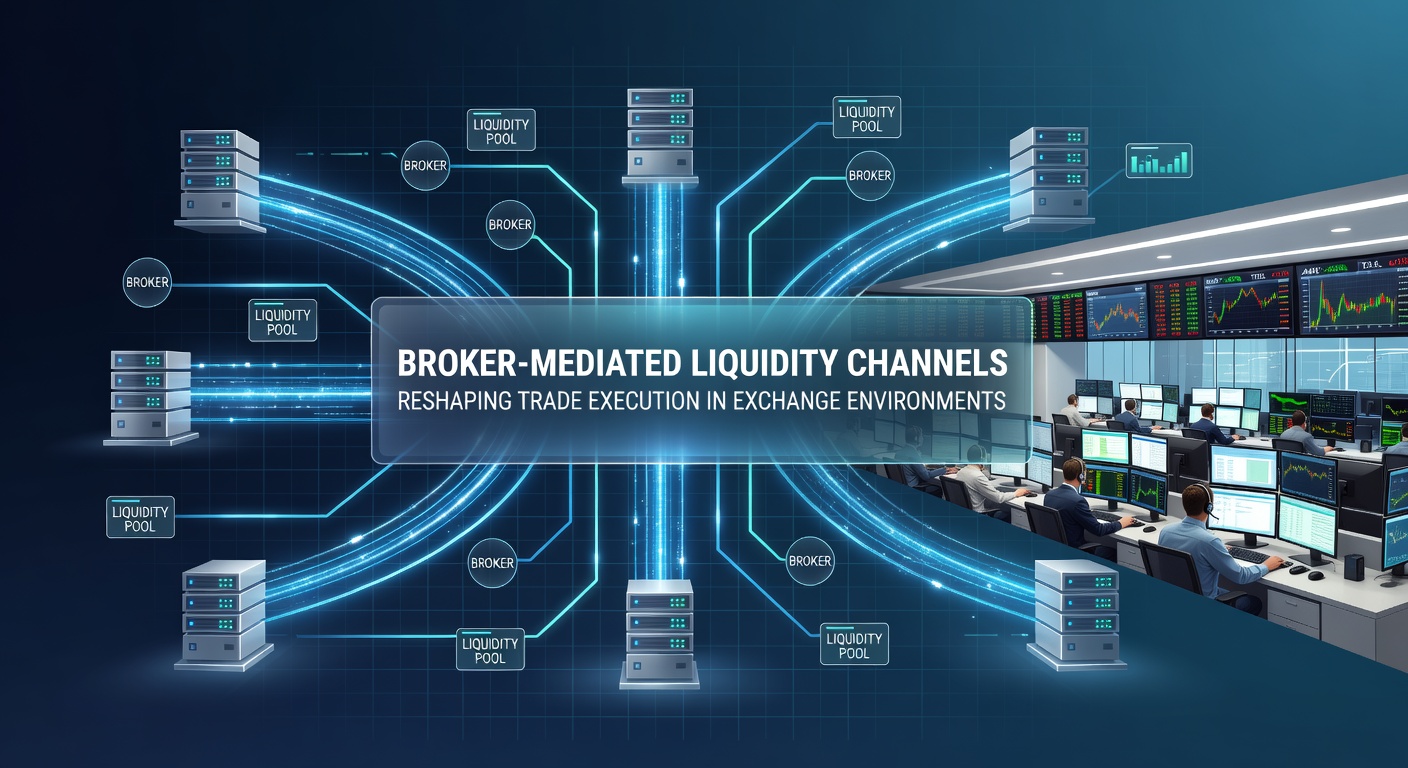
Broker-mediated liquidity channels now route substantial portions of order flow through structured intermediary networks that aggregate bids and offers before they reach central exchange order books, and this process alters matching speeds along with price discovery mechanics across multiple asset classes. Data compiled through 2025 into early 2026 shows volume shares handled by these channels rising steadily as platforms integrate API connections that allow brokers to supply synthetic depth without altering the underlying exchange matching engine.
Mechanics of Channel Formation
Traders connect to brokers who maintain pre-funded liquidity pools drawn from institutional participants, retail aggregators, and internal crossing systems, while the broker simultaneously posts offsetting orders directly onto the exchange to balance net exposure. Execution occurs in layers where an initial client order may fill against the broker's internal book before any residual volume reaches the public market, and this layered approach reduces latency for the end user even as it changes the visible order book composition at any given moment.
Systems deployed in May 2026 by several large intermediaries introduced dynamic routing algorithms that evaluate real-time exchange depth, fee schedules, and settlement risk before deciding whether to internalize or externalize each ticket. Those algorithms rely on historical fill-rate data and volatility signals to minimize slippage, yet the final trade report still carries the exchange timestamp once the residual leg clears the central limit order book.
Impact on Execution Quality Metrics
Studies released by the University of Nevada Reno's gaming research unit document tighter effective spreads for orders routed through broker channels compared with direct retail submissions, although the difference narrows during periods of extreme volatility when internal pools thin out. Time-to-fill statistics collected across major betting exchanges indicate a median reduction of 180 milliseconds for channel-routed wagers, a figure derived from timestamp analysis of over 12 million matched tickets between January and April 2026.
Market participants observe that price improvement occurs most consistently on liquid events where broker desks can hedge quickly on correlated instruments, whereas thinner markets show higher rates of partial fills that ultimately land on the exchange at the original quoted price. Regulators in several jurisdictions now require brokers to disclose internalization percentages on a monthly basis, creating a growing dataset that researchers use to examine whether channel activity influences long-term price efficiency.

Regulatory and Infrastructure Responses
Authorities outside the United Kingdom, including the Australian Communications and Media Authority and the Alcohol and Gaming Commission of Ontario, have issued updated guidance requiring clear labeling of broker-routed versus direct exchange trades in post-trade reports. These rules aim to preserve transparency for participants who wish to evaluate whether their orders benefited from intermediation or executed solely against public liquidity.
Exchange operators have responded by enhancing their own APIs to accept tagged orders that identify the routing path, allowing downstream analytics platforms to segment performance data without compromising anonymity. Industry groups such as the European Gaming and Betting Association published a 2026 white paper that catalogs common channel architectures and highlights settlement finality differences when internalization occurs.
Future Trajectory
Engineers continue to refine predictive models that anticipate liquidity imbalances hours ahead, enabling brokers to pre-position inventory across multiple exchanges before client demand materializes. As these models mature, the proportion of total exchange volume that touches broker channels is projected to increase further, particularly once 24-hour event trading becomes standard on additional platforms.
Conclusion
Broker-mediated liquidity channels have become a structural feature of contemporary exchange environments, shifting portions of order flow through intermediary books before final matching occurs on central venues. Execution metrics, regulatory filings, and infrastructure upgrades all reflect this ongoing integration, with measurable effects on spread, latency, and transparency that continue to evolve as technology and oversight advance in parallel.