Broker Networks and Market Fluidity: Oversight Structures in Sports Wagering Platforms
Written by Rafael Werner · Jun 19, 2026
Broker Networks and Market Fluidity: Oversight Structures in Sports Wagering Platforms
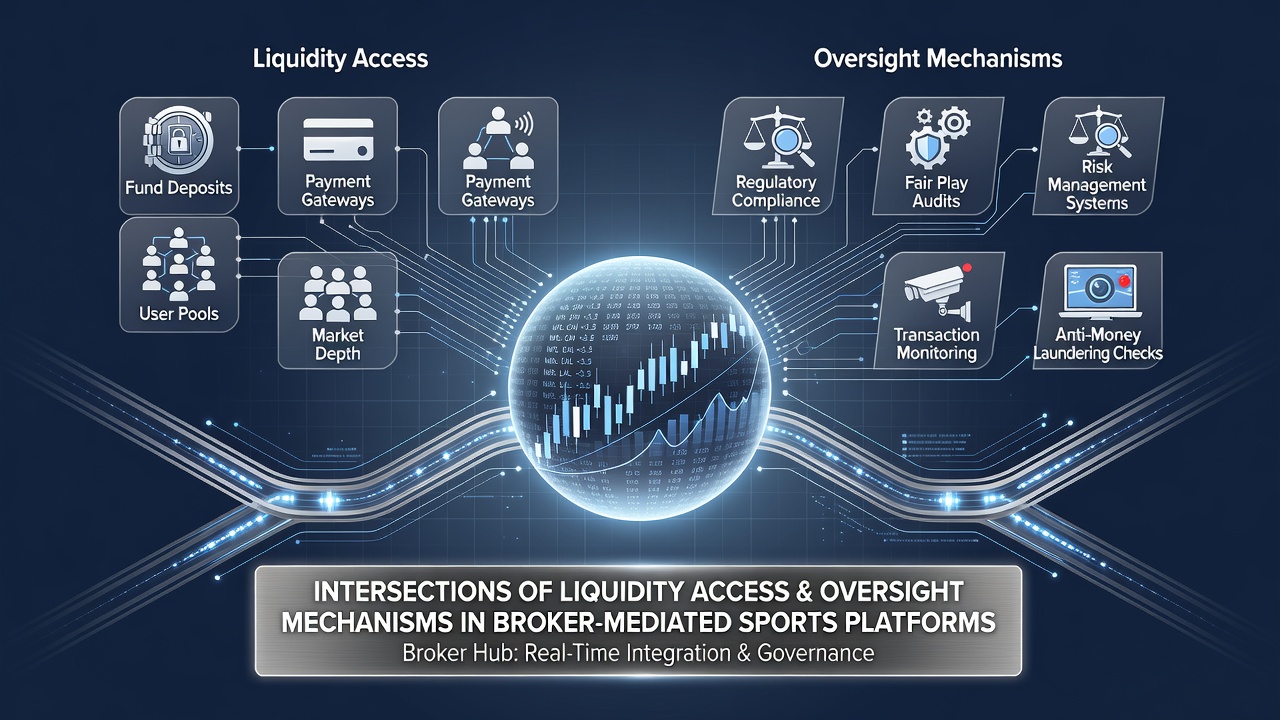
Broker-mediated sports platforms connect individual participants to deeper betting exchanges where liquidity pools determine how quickly wagers match and at what odds, while oversight mechanisms enforce compliance across payment flows and account management. These systems operate through layered access points that balance market depth with regulatory requirements, creating operational frameworks that evolve alongside technological and legal developments.
Liquidity Pathways in Mediated Environments
Traders gain entry to sports markets through brokers who aggregate orders and route them into exchange environments where matched bets form the core liquidity. Data from industry analyses shows that broker channels often account for a significant share of volume in major leagues because they streamline deposits, withdrawals, and margin requirements that direct exchange accounts sometimes complicate. Payment integration plays a central role here, since faster settlement options allow participants to maintain positions across multiple events without delays that erode opportunities.
Market depth fluctuates with event timing and bet type, yet brokers who maintain relationships with multiple exchanges can shift orders to venues where liquidity remains stronger. This routing capability becomes especially relevant during high-volume periods such as major tournaments, when single-platform limits can constrain larger positions. Observers note that platforms offering tiered commission structures alongside liquidity access tools help traders calculate net costs more precisely before committing capital.
Supervisory Layers and Compliance Requirements
Oversight mechanisms in these platforms encompass identity verification, transaction monitoring, and risk assessment protocols that regulators impose to address money laundering risks and participant protection standards. Licensing bodies in various jurisdictions require brokers to implement real-time checks that flag unusual activity patterns while preserving the speed necessary for live trading. These controls intersect directly with liquidity access because delayed verifications can temporarily restrict fund movement and therefore market participation.
June 2026 brought renewed focus on cross-border data sharing among regulators, prompting several platforms to upgrade their monitoring dashboards for consistent reporting across regions. European authorities alongside North American gaming commissions have aligned certain reporting formats, which has reduced duplication for brokers operating internationally. Such harmonization efforts affect how quickly new liquidity sources can be onboarded without triggering additional compliance reviews.
Where Access and Control Converge
The intersection emerges most clearly in how brokers configure user permissions and automated safeguards that respond to both market conditions and regulatory triggers. For instance, position limits tied to account verification levels allow higher liquidity access only after sustained compliance history, creating graduated pathways that platforms use to manage exposure. Research from gaming associations indicates these graduated models help maintain orderly markets while meeting supervisory expectations for risk segmentation.
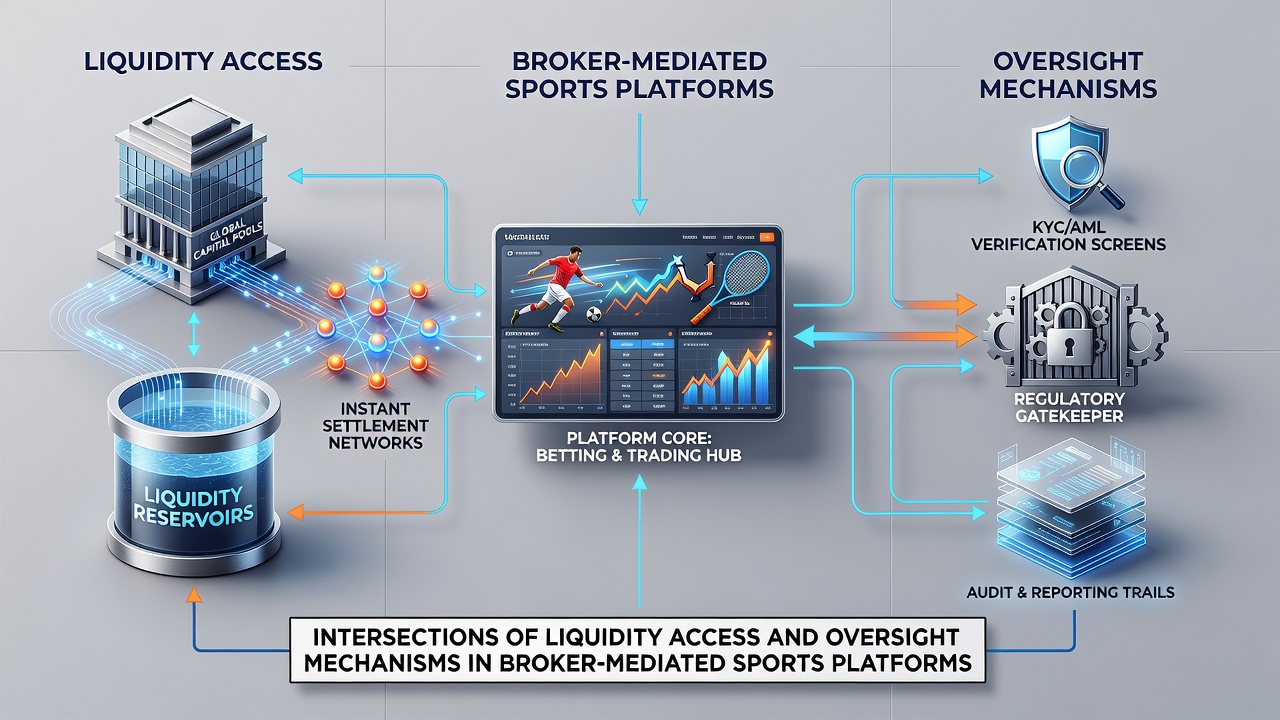
Technology stacks that link payment processors directly to trading interfaces enable automated pauses when oversight flags activate, preventing further order placement until reviews conclude. This linkage reduces manual intervention yet requires precise calibration so that legitimate trading activity does not face unnecessary interruptions. Platforms that document these calibration processes through periodic audits demonstrate stronger alignment with evolving regulatory expectations.
Take one European operator that integrated blockchain-based transaction ledgers with traditional oversight tools, resulting in faster reconciliation during high-volume windows without compromising audit trails. Similar adaptations appear in other regions where local rules emphasize transparency in fund flows between brokers and underlying exchanges. The result is an environment where liquidity access expands in measured steps rather than through unrestricted channels.
Regional Variations and Platform Adaptations
Different jurisdictions apply distinct approaches to broker oversight that influence how liquidity reaches participants. Australian frameworks emphasize harm minimization alongside market integrity, leading some brokers to embed spending limit tools directly into order entry screens. Canadian provincial regulators have tested real-time reporting feeds that connect broker systems to centralized oversight portals, shortening the time between transaction occurrence and regulatory visibility.
These variations create operational considerations for platforms serving multiple markets, since a single liquidity pool must satisfy diverse compliance layers simultaneously. Industry reports from organizations such as the European Gaming and Betting Association highlight how standardized technical interfaces help brokers manage these overlapping requirements without fragmenting their order routing capabilities. Meanwhile, data from the Alcohol and Gaming Commission of Ontario shows steady growth in broker-mediated volumes as verification processes become more seamless.
Conclusion
Broker-mediated sports platforms continue to refine the balance between liquidity access and oversight mechanisms through integrated technology and adaptive compliance structures. As regulatory coordination advances and payment systems evolve, the operational intersections between these elements shape how participants engage with sports markets. The patterns observed through 2026 suggest ongoing adjustments rather than wholesale shifts, with platforms that align technical capabilities to supervisory needs maintaining stronger positions in competitive environments.