Betting and Gaming Council Members Achieve Top Age Verification Scores in Serve Legal Tests
Written by Mia Simon · Aug 23, 2026

Betting and Gaming Council Members Achieve Top Age Verification Scores in Serve Legal Tests
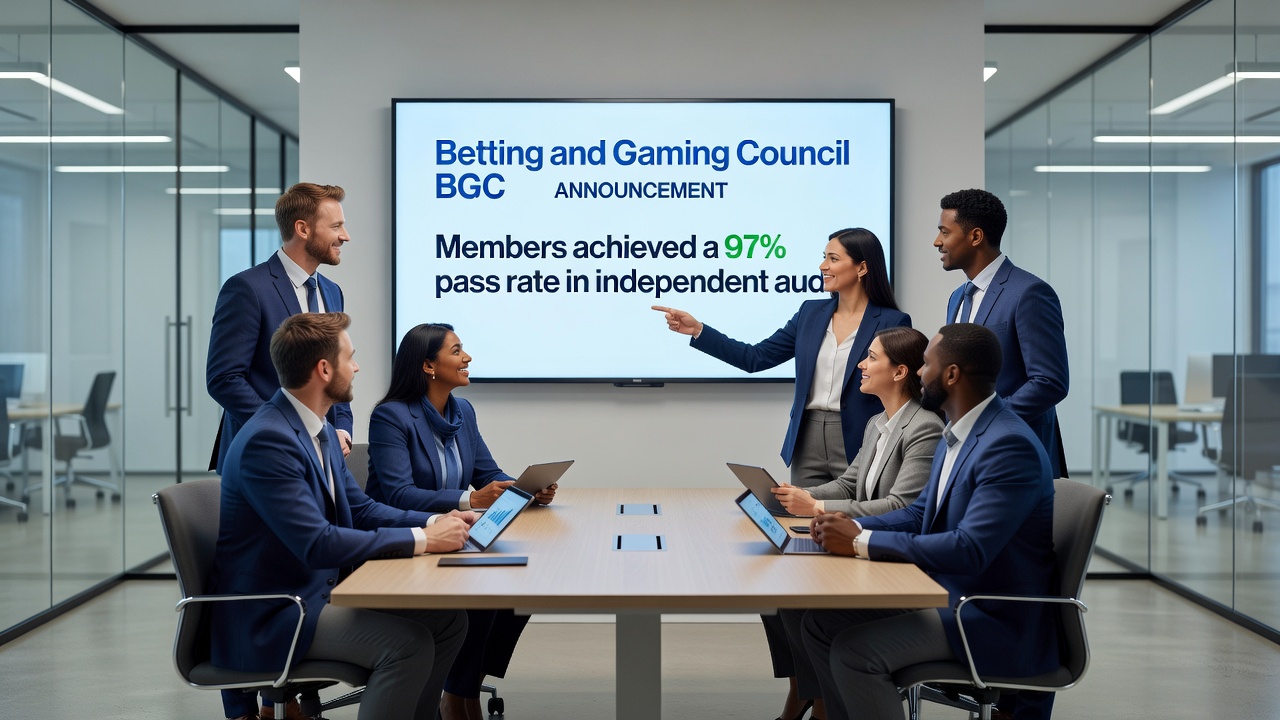
The Betting and Gaming Council announced that its members recorded a 97 percent pass rate during independent age-verification test purchasing carried out by Serve Legal across the period from May 2025 through April 2026, and observers note this figure stood higher than results posted by supermarkets at 80 percent, convenience stores at 77 percent, vape shops at 61 percent, and delivery services at 44 percent while also marking a five-percentage-point rise from the previous year.
Details of the Independent Testing Programme
Serve Legal conducted the mystery shopping exercises at regulated betting and gaming outlets operated by BGC members, and data from those visits showed consistent adherence to Challenge 25 policies that require staff to request identification from anyone appearing under the age of 25; researchers tracking retail compliance across multiple sectors found the betting and gaming results reflected thorough staff training programmes that equip employees to handle age-restricted sales without error.
Testing occurred at regular intervals throughout the twelve-month window, and figures compiled by the independent provider revealed that operators maintained high standards even during peak trading periods when customer volumes increased; those conducting the assessments documented that staff members routinely asked for valid identification documents such as passports, driving licences, or PASS-accredited cards before completing transactions involving age-restricted products or services.
Comparative Performance Across Retail Sectors
When placed alongside other age-restricted retail categories, the betting and gaming sector outperformed every comparator group included in the Serve Legal benchmarking exercise, and analysts examining the full dataset pointed out that the 97 percent pass rate exceeded supermarket results by 17 percentage points while surpassing convenience store performance by 20 points and leaving vape shops and delivery services further behind.
Delivery services recorded the lowest pass rate at 44 percent, a figure that highlights differences in operational models where face-to-face verification occurs less frequently than in physical retail environments; convenience stores and supermarkets, although more established in age-restricted sales, still trailed the betting and gaming operators whose dedicated training protocols appear to produce stronger outcomes according to the test purchasing records.
Year-over-Year Progress and Training Investments
The five-percentage-point improvement from the prior testing cycle demonstrates that BGC members continued to refine their compliance procedures between 2025 and 2026, and reports indicate that ongoing investment in staff development played a central role in sustaining these gains; training modules now incorporate scenario-based exercises that simulate real-world customer interactions and reinforce the legal requirement to refuse service when identification cannot be provided.
Operators updated their internal policies to include refresher courses at shorter intervals, and data collected during the Serve Legal visits showed fewer instances of missed challenges compared with earlier rounds; those monitoring the sector observe that such incremental improvements compound over time and contribute to the overall 97 percent success rate recorded for the most recent period.
Regulatory Context in August 2026
As of August 2026 the UK Gambling Commission continues to emphasise robust age verification as a core licensing condition, and the BGC announcement aligns with ongoing regulatory expectations that licensed operators maintain high standards of social responsibility; the independent test purchasing results provide one measurable indicator that regulated betting and gaming businesses are meeting those expectations at rates above those seen in parallel retail channels.
Challenge 25 remains the primary policy framework referenced in the testing methodology, and compliance with this standard requires staff to apply consistent judgment when assessing customer age; the betting and gaming sector's performance suggests that repeated training cycles and clear operational guidelines have helped embed these practices across member organisations.
Conclusion
The Serve Legal results for May 2025 to April 2026 establish that BGC members reached a 97 percent pass rate in age-verification testing, a level that exceeded all compared sectors and improved on the previous year's outcome by five percentage points. The findings underscore the effectiveness of Challenge 25 implementation and staff training within the regulated UK betting and gaming industry. Further details appear in the official BGC statement and associated Serve Legal benchmarking data.